Smart devices have become part of our everyday lives.
From watches that track our heart rates and daily activity to apps that analyze our sleep, technology is constantly finding new ways to measure, monitor, and improve our performance.
So, why wouldn’t pickleball be next?
Artificial intelligence (AI) could open the door to a new way of understanding the game.
What was once based largely on feel, instinct, and repetition could soon be enhanced by data that helps players understand their technique, identify weaknesses, and make meaningful improvements. But this idea isn't entirely new.
Let's talk about it ...
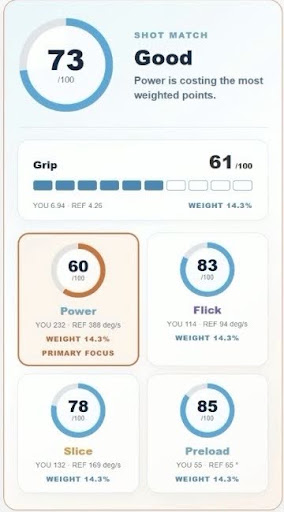 Image credit: Sara McInnes
Smart Tennis Racquets: An Idea Ahead of Its Time?
More than a decade ago, companies were already experimenting with smart tennis technology.
Zepp developed a sensor that attached to the bottom of a tennis racket handle, capturing swing data and translating it into performance insights through a smartphone app.
Babolat introduced its connected Play Pure Drive racket in 2013, with sensors built into the handle, while HEAD later introduced a tennis sensor powered by Zepp technology in 2018.
These products could track aspects of performance such as swing speed, spin, shot type, and impact location. The idea was simple: give players information they couldn't easily measure on their own.
Yet smart-racket technology never became an everyday training tool for most recreational players.
Perhaps the concept was ahead of its time. Perhaps the cost, technology, or practical benefits weren't compelling enough. Whatever the reasons, the idea never disappeared.
Today, smartwatches, fitness trackers, and AI-powered applications have made performance tracking far more familiar. We're increasingly accustomed to using data to understand how we move, train, and perform.
Could pickleball be ready for its own smart-tech evolution?
What If Your Paddle Could Tell You More?
Think about the last time you hit a shot that sailed long, landed in the net, or went somewhere you never intended. What's one of the first things a player might say when using someone else's paddle?
“It's the paddle!”
We laugh about it, but there's a reason we blame our equipment. The paddle is our point of contact with the ball, and its weight, balance, grip, and feel all influence how we play.
But what if the paddle could do more than give us a certain feel? What if it could provide measurable information about what actually happened?
Imagine a smart paddle that analyzes your hitting patterns.
Are you preparing early enough? Is your paddle face positioned as intended? Are you following through consistently? Are you making contact in the same area of the paddle?
These are questions players and coaches work through every day.
Many of the movements involved happen in a fraction of a second, making them difficult to assess without video, careful observation, or specialized equipment.
Technology could offer another way to understand what's happening.
From Raw Data to Real Improvement
Collecting data is one thing. Turning it into something a player can actually use is another.
Most recreational players don't need a screen full of numbers after every shot. They need to understand what they're doing well, where they're struggling, and what they can change.
Imagine hitting a series of repetitive shots during practice.
A smart paddle captures data about your swings and identifies patterns.
Perhaps your paddle-face angle changes more than you realize, or your follow-through varies from shot to shot.
Instead of simply hitting another hundred balls and hoping something improves, you could focus on a specific adjustment, repeat the drill, and see whether your technique becomes more consistent.
That's the real opportunity: smarter practice, not just more practice. Of course, a paddle sensor can't tell you everything about a shot.
Footwork, body positioning, timing, incoming ball speed, and court conditions all influence the outcome. Some measurements may also require specialized sensors or video analysis.
The goal isn't to replace a good coach or eliminate the importance of feel. It's to give players another tool to understand their game.
Grip Pressure: A Small Detail That Could Make a Big Difference
Smartwatches already provide useful information about movement, heart rate, and physical activity.
A sensor on the paddle could potentially tell us more about how we actually hit the ball.
One particularly interesting metric is grip pressure.
How many times have you heard a coach tell you to loosen your grip?
Holding the paddle too tightly can interfere with touch and control, yet how do you know whether you're actually gripping it too tightly?
Does your grip change when you're nervous, rushing a shot, or trying to hit the ball harder?
Most players rely on feel to answer those questions.
A smart paddle equipped with appropriate sensing technology could potentially measure changes in grip pressure and help players recognize patterns they might otherwise miss.
Combined with information about swing characteristics, paddle-face angle, and movement, grip-pressure data could help players explore how their technique changes across different shots and situations.
The key is turning those measurements into useful feedback. Knowing that your grip pressure changed is interesting. Understanding when it changed, why it might matter, and what to do about it is where the real value lies.
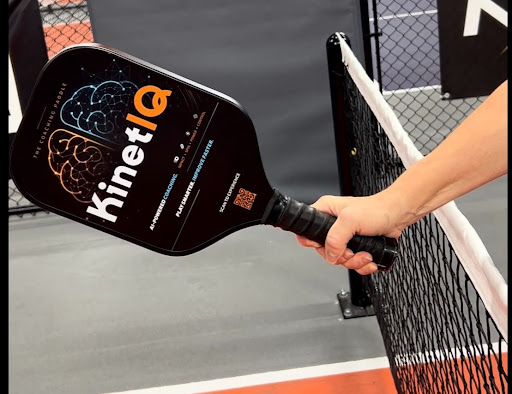
Image credit: Sara McInnes
A Training Attachment or a Dedicated Smart Paddle?
If smart-paddle technology becomes more widely available, there's another important question: should the technology attach to an existing paddle, or be built into a paddle designed specifically for training?
Both approaches have advantages.
An adaptable sensor could appeal to players who already love their paddle.
A lightweight attachment that works across different models would let players analyze their technique without changing equipment.
The challenge would be ensuring compatibility and accurate measurements without significantly affecting the paddle's balance or feel.
A dedicated training paddle offers another possibility.
Sensors could be integrated into the design from the beginning, allowing the paddle and its software to work together.
The trade-off is that players would need to practice with a different paddle from the one they use in competition, and differences in weight or balance could affect how easily the training transfers to match play.
Perhaps the best solution depends on the player.
Some will value convenience and the ability to use their existing equipment.
Others may prefer a dedicated training tool designed to provide the most useful feedback possible.
Ultimately, the question isn't just what technology can be built. It's what players will find useful enough to use consistently.
AI Beyond the Paddle: Video Analysis and Line Calling
Smart paddles are only one part of the picture.
AI-assisted video analysis could help players examine footwork, court positioning, and shot selection.
Combining video with paddle data could provide a more complete view of how a shot was executed and what happened as a result.
This could be particularly valuable for recreational players who don't have regular access to a coach.
Technology might help them identify areas to work on between lessons, although the feedback would still need to be accurate and grounded in sound coaching principles.
AI is also finding applications in line calling.
In a fast-paced rally, determining whether a ball lands in or out can be difficult, even for experienced players.
Camera-based systems can analyze a ball's position relative to court boundaries, potentially reducing disputes in competitive play.
However, reliable line calling requires suitable cameras, accurate calibration, and fast, consistent decisions.
A system designed for professional competition may also be too expensive or complicated for a community court.
As with performance analysis, the technology needs to offer a clear benefit without making the game unnecessarily complicated.
The Future of Pickleball
Smart technology has already changed how we approach fitness, training, and performance in other sports.
Pickleball seems like a natural next step.
The idea of a paddle that measures aspects of your technique, identifies patterns, and helps guide your practice is compelling.
But questions remain. How accurate will the measurements be? Will players understand and trust the feedback? Will an attachment or a dedicated training paddle offer the better experience?
And will the benefits justify the cost?
These answers will determine whether smart-paddle technology becomes a niche training tool or a regular part of the sport.
We play pickleball for the competition, the social connection, and the satisfaction of hitting a great shot.
Technology should enhance those experiences, not turn every recreational game into a performance evaluation.
The best players don't improve simply because they hit more balls. They improve because they learn from the balls they hit.
If AI can help us understand those lessons more clearly, perhaps the next big step in pickleball isn't just more practice.
It's smarter practice. And that could change the way we learn the game.
This article was taken from our 'Control the Kitchen' Newsletter, if you're interested in receiving more content like this, please feel free to sign up using the subscribe section located at the bottom left of this page (or underneath the article if you're on mobile), thanks!


